

You got the grant.
You’re building the team.
No one taught you how to run one.
We help early career Principal Investigators build self-sustaining labs, hire the right people, and master team management.
The Problem
The Unspoken Challenge of the New Principal Investigator:
You spent a decade mastering your discipline, publishing papers, and securing prestigious funding. But the day you open your lab, your job changes completely:
You become a small business owner overnight: You’re responsible for hiring, budgets, culture, and project management, with zero formal management training.
Bad hires and management friction: Time and energy spent trying to fix a bad hire eat away at your grant dollars, research timelines, and mental energy.
You are drowning in administrative drag: You’re fighting with your HR and budget team for updated numbers. Aren’t you supposed to be on the same team?
Your science is suffering: You spend all day putting out interpersonal fires and sitting in unstructured meetings knowing you have an infinite number of better things to do with your time.
The Hard Truth: Brilliant research alone won't free up your time and energy to get you tenure or your next grant. A well-run lab will.
The Solution
The Performance Reset: Behavioral Science Meets Management Principles
We provide a structured, behavior-focused management roadmap designed specifically for academic labs, research groups, and mission-driven organizations.
We don't give you generic advice. We help you systematically tackle the two biggest bottlenecks holding your team back:
The Human Systems: We implement practical behavioral science frameworks to fix hiring processes, design clear roles, build psychological safety, and resolve team conflict.
The Operational Systems: We co-create simple processes to streamline workflows and reporting, giving you back up to 5 hours a week of headspace.
Every session ends with clear actions, behavioral scripts, and simple templates you can use immediately.
Our Process
Your Path to a Self-Running Team
Assess & Diagnose - Pre-work surveys and exercises to surface your current systems, habits, and challenges
Build & Practice - Facilitated sessions focused on real scenarios and skills to fit your team
Implement and Refine - You apply changes between sessions, with time to reflect and adjust

We focus on:
Fundamental Business Tools - You tell us the problems you’ve experienced, we tell you the why, and we give you the frameworks of when to say and do the right things.
Behavioral Science Principles - We get a better understanding of who you are and adapt the principles to you. We show you the principles that affect everything, such as decision-making, psychological safety, learning, social cohesion, and morale.
Over Time - We’re talking about behavior change. We’re going to look at the habits and processes you’ve developed, and you’re going to figure out which ones you want to incorporate. Then you’re going to try them, and we’ll make adjustments. That’s not going to happen in a weekend intensive.
Testimonials

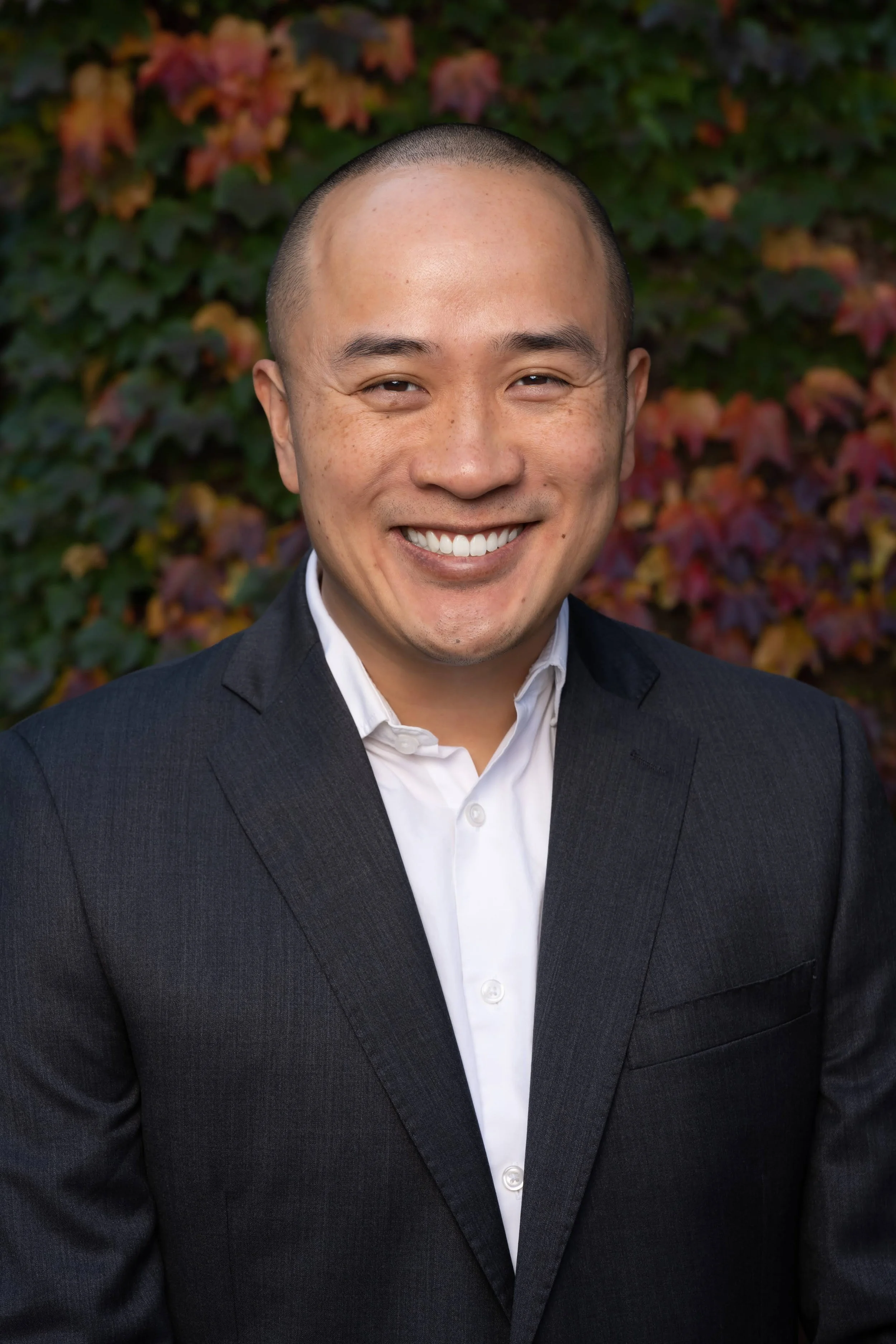
About Me
You Don't Need Management Theory. You Need Real-World Systems.
Hi, I’m Jimmy Tan.
If you ask traditional academic mentors or successful PI’s how to solve management issues, their default answer is usually “hire good people”.
I am not a career academic, and that is my greatest strength as your consultant.
For over 12 years, I have worked across financial markets, political campaign operations, and civic organizations. I have managed decentralized teams across 11 states, built rapid behavioral hiring frameworks, and trained leaders on AI workflows and cognitive productivity architectures.
When I look at your lab and how you currently manage it, I see an operating system that could use some adjustments.
My work combines behavioral science, management principles, and agile organizational design to uncover the hidden friction points in your research team. We don't try to change who you or your researchers are; we redesign the structures you use to communicate, delegate, and execute.
FAQ

-
Yes. Many participants have several years of management experience. This program focuses less on exposure to concepts and more on 1) how your existing habits, systems, and assumptions are shaping outcomes and 2) actionable steps to make improvements to your process.
Experienced managers often find the greatest value in refining what they already do and identifying small changes that have outsized downstream effects. Think of it as 10% improvements across all of your processes.
-
The core management principles apply across academic labs and nonprofit teams. The training is adapted to the constraints, structures, and realities of each environment.
Examples, exercises, and implementation guidance are contextualized so participants can apply the material directly to their setting. Any person who manages human beings can benefit from our training.
-
Many trainings focus on abstract principles or recommend “hiring the right people”. This program focuses on specific behaviors, systems, and decision points. We recommend what to say, when to say it, and how to structure work so problems don’t keep recurring.
The emphasis is on practical implementation and behavior change, not theory alone.
-
Each session includes light pre-work or reflection designed to be completed in under 30 minutes.
The goal is not to add more work, but to help you compare your current processes to the recommended best practices. We can’t watch you manage others, but we can have you tell us how you think and what you physically do.
-
From our observations, there are some major gaps between the available training and the actual implementation of those best practices. This program is not a replacement for existing tools or policies. Instead, it helps participants make sense of what already exists and decide how to apply it effectively in their specific context.
Many participants find this bridges the gap between having resources and actually using them well. We recommend what to physically say and do and why those strategies are effective.
-
That’s common. Many participants come in with a specific challenge in mind. The program helps identify upstream factors like role clarity, expectations, feedback, training, and systems that often contribute to underperformance.
While outcomes vary by situation, participants typically leave with clearer next steps and more confidence addressing the issue.
-
This is a facilitated training program with applied elements. It combines structured content, guided reflection, and practical tools.
While individual situations are discussed, the focus is on building skills and systems participants can apply independently over time.